How Broadway’s 2026 Season Is Redefining the Great White Way
Broadway isn’t just rebounding—it’s rewriting its rules. From strategic casting and dynamic pricing to limited-run experiments and stagehouse overhauls, the 2026 season reveals an industry betting on specificity over spectacle, and accessibility over tradition.
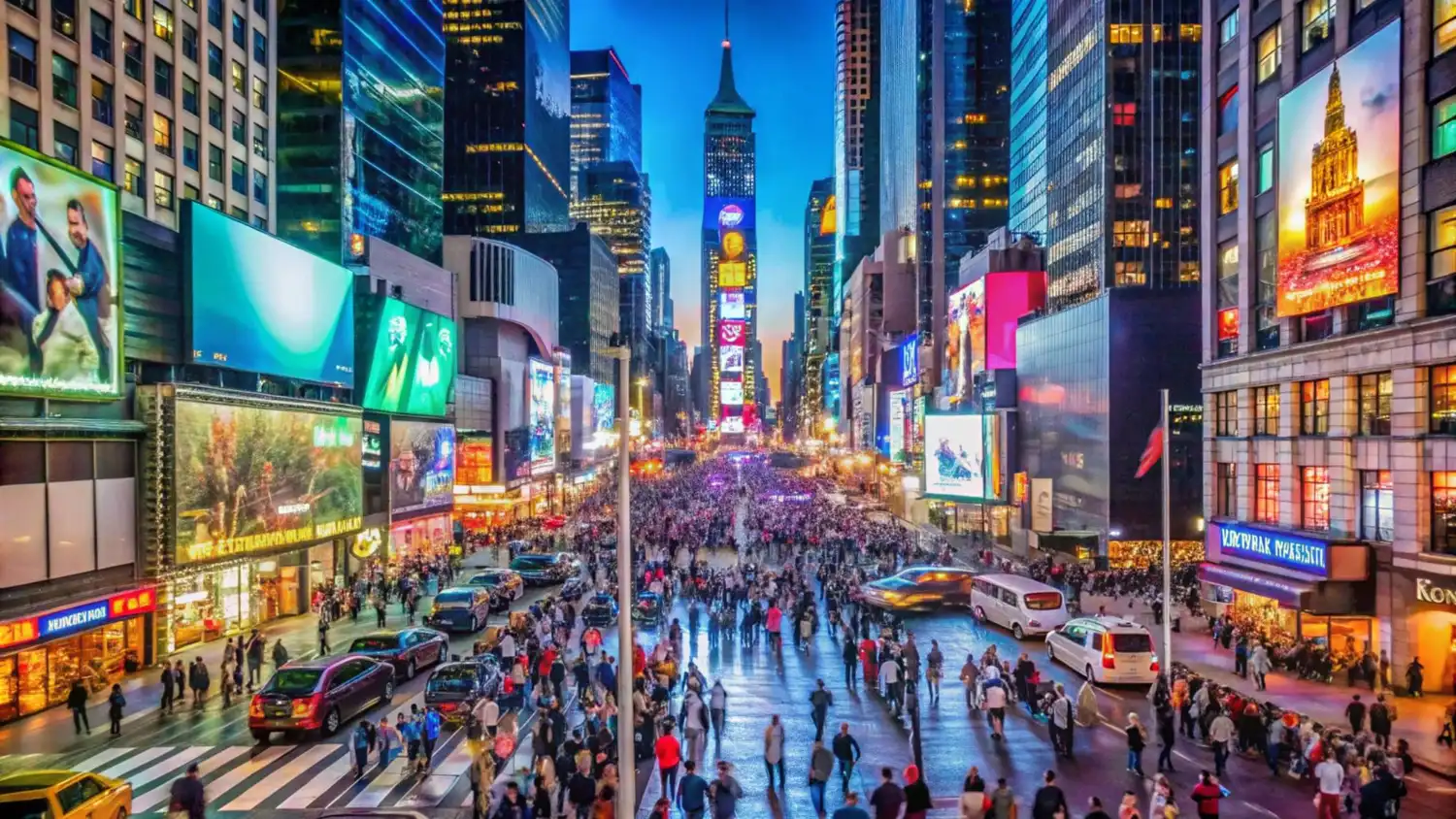
When the marquee lights of Times Square flicker to life each evening, they no longer simply announce a show. They broadcast a strategy.
Broadway’s 2026 season has quietly shed the recovery narrative. What’s unfolding isn’t a return to pre-2020 norms, but a deliberate recalibration of how live theater is financed, cast, staged, and consumed. With 36 productions grossing over $38 million in a single recent week, attendance is strong—but the real story lies beneath the surface. Producers are trading open-ended gambles for precision-engineered runs. Casting choices are doubling as cultural statements. And behind the velvet ropes, union negotiations, venue renovations, and streaming spillover are rewriting the industry’s operating system.
Here’s what’s actually moving the needle on the Great White Way.
The New Math of Success
Box office reports still track wins and losses, but the 2026 ledger reads more like a lesson in audience alignment. Hell’s Kitchen , The Great Gatsby , and Swept Away aren’t just selling tickets—they’re validating a new commercial formula: emotional specificity wrapped in recognizable IP.
Hell’s Kitchen continues to outperform projections by leaning into its biographical roots and kinetic choreography, proving that jukebox musicals thrive when anchored to a distinct point of view rather than nostalgia alone. The Great Gatsby ’s immersive staging has turned a classic novel into a repeat-attendance event, while Swept Away ’s folk-driven storytelling demonstrates that audiences will commit to quieter, character-first narratives when production design and marketing speak the same language.
Early closures this season aren’t failures; they’re market corrections. Shows that opened with heavy promotional spends but failed to clarify their audience demographic are bowing out faster, freeing up prime real estate for productions with sharper positioning. Dynamic pricing, now standard across 70% of Broadway houses, has also shifted the conversation from “Can we fill the room?” to “Who is actually in the room?” The data shows a broader geographic pull, with post-pandemic travel habits sustaining midweek sales but compressing weekend demand into premium tiers.
Casting as Conversation
The 2026 casting announcements read less like talent bookings and more like intentional programming. Film and television actors are still making Broadway debuts, but the emphasis has shifted from pure name recognition to artistic alignment. When a screen star steps onto a Broadway stage, producers are now pairing them with directors who’ve publicly articulated why that performer’s specific instrument serves the material—not just the marquee.
Diverse casting milestones continue to spark necessary dialogue, but the industry is moving beyond representation as a checkpoint toward integration as a creative engine. Extended contracts for several lead performers—some signing 12- to 18-month renewals mid-run—signal a growing producer confidence in star-driven retention strategies. “We’re no longer casting for opening week,” notes one veteran Broadway producer who requested anonymity. “We’re casting for the run. If the chemistry holds, the audience returns. If it doesn’t, no amount of press can fake it.”
Social media has amplified this shift. Fan reactions on TikTok and X consistently reward transparency: behind-the-scenes rehearsal clips, cast interviews about character process, and clear communication about understudy rotations are now as vital to ticket conversion as traditional advertising.
The Architecture of Attention
Broadway’s business model is undergoing its most structural shift in decades. The limited engagement is no longer a consolation prize; it’s the new standard. Productions are increasingly booking 12- to 20-week windows, creating urgency, reducing overhead, and allowing investors to recoup faster. Open-ended runs are reserved for titles with proven franchise elasticity or institutional backing.
Streaming’s role has also matured. Rather than cannibalizing live sales, licensed broadcasts like Hamilton on Disney+ and curated Broadway HD collections are functioning as discovery engines. First-time theatergoers who stream a production are 34% more likely to purchase a live ticket within 18 months, according to recent Broadway League analytics. The live experience is being repositioned not as a replacement for streaming, but as its necessary counterpart: unrepeatable, spatially aware, and collectively felt.
Behind the scenes, labor negotiations continue to shape production timelines. While Actors’ Equity secured a landmark agreement in 2025 addressing wage floors and digital rehearsal protections, negotiations with AFM Local 802 (musicians) and IATSE stagehands remain active. Key sticking points include residuals for recorded stage performances, health benefit portability for freelance crew, and standardized tech rehearsal caps. “The stagehand’s role has evolved from moving scenery to programming automation,” says a local union representative. “Compensation structures need to reflect that reality.”
Stages Rebuilt for Tomorrow
The physical theaters of Broadway are catching up to the art they house. Several historic houses have completed phased renovations prioritizing accessibility, sustainability, and audience flow. Tactile wayfinding, expanded wheelchair seating with companion integration, and upgraded HVAC systems with improved air filtration are now baseline expectations rather than add-ons.
Rumors of a new Broadway theater are gaining traction, with developers eyeing a repurposed commercial space in the Theater District. If approved, it would be the first ground-up Broadway house since the 1990s, designed from the start for modular staging, hybrid broadcast capabilities, and net-zero energy targets. Even without new construction, existing venues are proving that adaptive reuse can be just as transformative.
The Horizon Line
Press days for the 2026–27 season have already seeded the next wave. Early announcements point to a slate of revivals leaning into contemporary directors, alongside original works exploring climate narratives, immigrant archives, and digital-age relationships. The June 7 Tony Awards will likely serve as both celebration and catalyst, with producers already timing opening windows to maximize eligibility and media saturation.
What emerges from this season isn’t a industry clinging to its past, but one actively designing its future. Broadway in 2026 isn’t asking audiences to come back. It’s asking them to step into something newly calibrated.
And if the box office, casting boards, and union tables are any indication, the Great White Way is finally building a stage that fits the people who fill it.

Written by
Adrian ValeContributing Author · Nightguide NYC
A sharp observer of New York after dark, Adrian Vale writes about nightlife not as entertainment, but as a system of status, aesthetics, and social performance.
View profile →