The traditional nightclub operated on a contract: presence in exchange for recognition. You showed up, you were seen, and that visibility functioned as social currency. The room sorted itself through attention—who was noticed, who was ignored, who held the center. That dynamic is still intact in many venues, but a new pattern is forming in parallel, one that rejects the premise entirely.
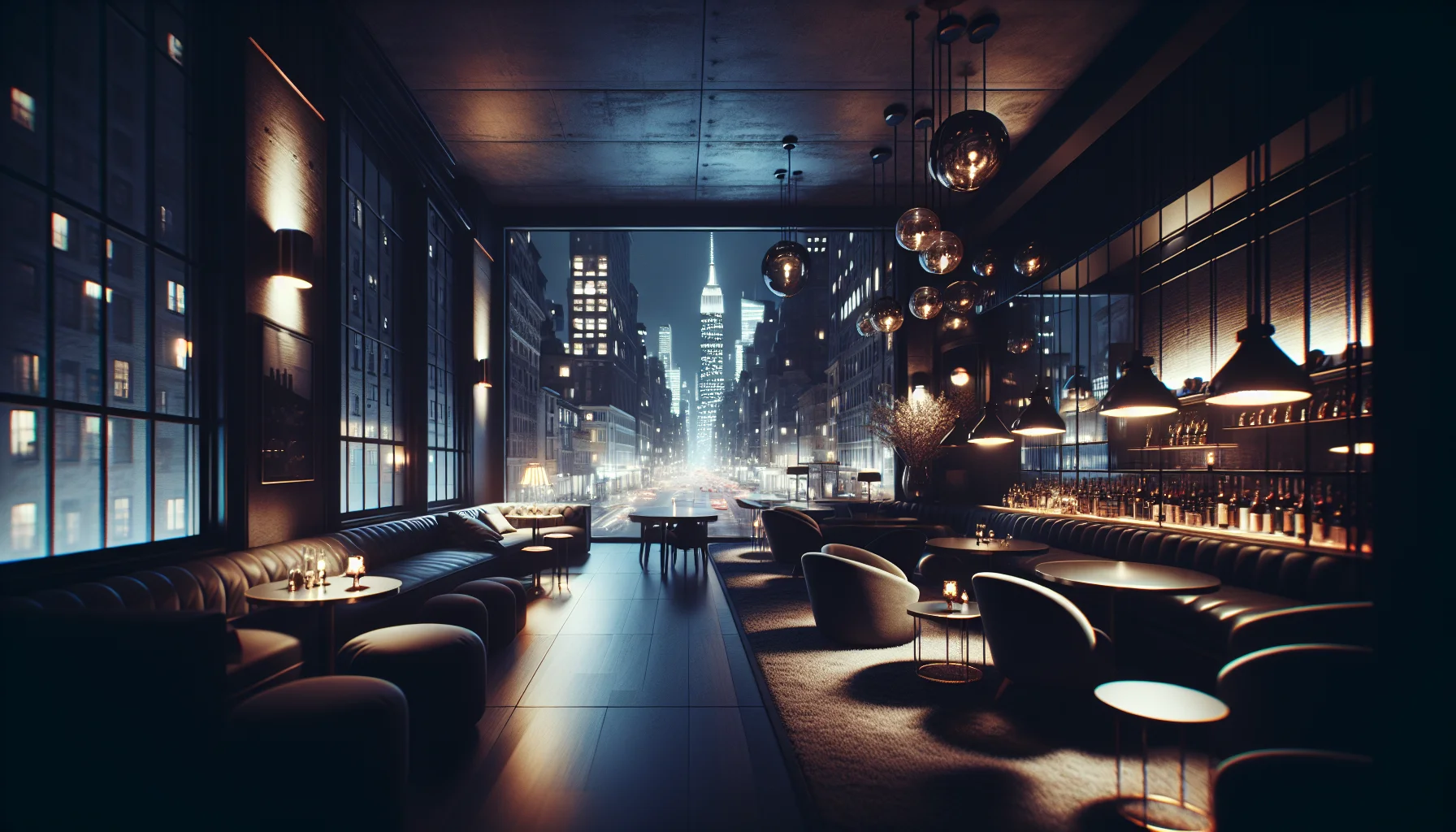
A segment of younger attendees is gravitating toward spaces designed around opacity rather than exposure. These aren't private parties or exclusive lounges. They're public venues where the architecture discourages recognition. Low light, fragmented sightlines, minimal branding. The goal isn't to be hidden—it's to exist without being cataloged. The distinction matters because it signals a shift in what nightlife is expected to provide.
This isn't about introversion or social anxiety. It's about managing the ledger. Being seen has always had a cost, but the terms have changed. Digital presence means social performance extends beyond the room. A night out is no longer contained to that night. The image circulates, the context mutates, and the individual becomes legible in ways they didn't authorize. The response isn't withdrawal. It's calibration.
The Decline of Display as Default
For decades, nightlife leaned on spectacle. The assumption was that people wanted to be looked at, or at minimum, were willing to accept visibility as the cost of participation. Dress codes, bottle service hierarchies, VIP areas—all of it reinforced a system where attention was distributed unevenly and that distribution was understood as part of the experience. That system hasn't collapsed, but it's no longer universal.
The new cohort doesn't view attention as inherently valuable. They've grown up in an attention economy and understand its mechanics better than any prior generation. They know what visibility extracts. The choice to attend a dimly lit warehouse over a mirrored lounge isn't rejection of nightlife itself—it's rejection of nightlife as performed identity. The body can still move, the night can still unfold, but the self remains partially withheld.
Venues are responding. Some are retrofitting interiors to reduce reflective surfaces. Others are limiting photo policies not as novelty but as core policy. The most successful spaces in this category don't announce themselves as sanctuaries. They simply don't provide the infrastructure for broadcast. The effect is cumulative. Over time, the crowd self-selects.
Intentional Retreat Without Exit
This isn't hermitism. The distinction is crucial. People are still going out, still occupying shared space, still engaging with strangers. What's changed is the mode of engagement. Instead of using the room to project status or identity, they're using it to temporarily suspend those pressures. The retreat is internal, not physical. The person is there, but not entirely available for documentation.
The behavior shows up in micro-patterns. Longer time spent on the floor, less time near entry points. Groups clustering in corners not because they're antisocial but because the corner offers geometric refuge. Phone use drops not because of enforcement but because the space doesn't reward it. These aren't house rules. They're emergent norms, shaped by the population that chooses to return.
What Visibility Costs Now
The shift isn't ideological. It's economic in the broadest sense—what you give up to gain access, and whether the exchange still holds. Previous generations accepted visibility as ambient. It was background noise, occasionally uncomfortable but mostly neutral. Now visibility is cataloged, cross-referenced, and permanent. The night doesn't end when you leave. It persists as data, searchable and recontextualizable.
The response isn't to stop going out. It's to go out differently. To seek environments where the terms are renegotiated. Where presence doesn't automatically convert into documentation. This doesn't mean the old model is obsolete. There are still crowds that want to be seen, still venues built around that desire. But the monoculture is fracturing. Nightlife is splitting into parallel systems with incompatible currencies.
The question isn't whether one model wins. Both will coexist. What's unclear is how operators navigate the split. Some will commit fully to one side. Others will try to serve both and risk serving neither. The floor is already deciding. Attendance patterns are forming. The opacity cohort isn't waiting for permission. They're finding the rooms that let them exist without being encoded.