From Script to Spotlight: The Collaborative Art of Making a Broadway Show
Ever wonder how a whispered idea becomes a standing ovation? Go behind the velvet curtain to discover the extraordinary collaboration behind every Broadway production—from the writer's first draft to the designer's final cue. Your insider's guide to the artists, artisans, and alchemy that bring the Great White Way to life.
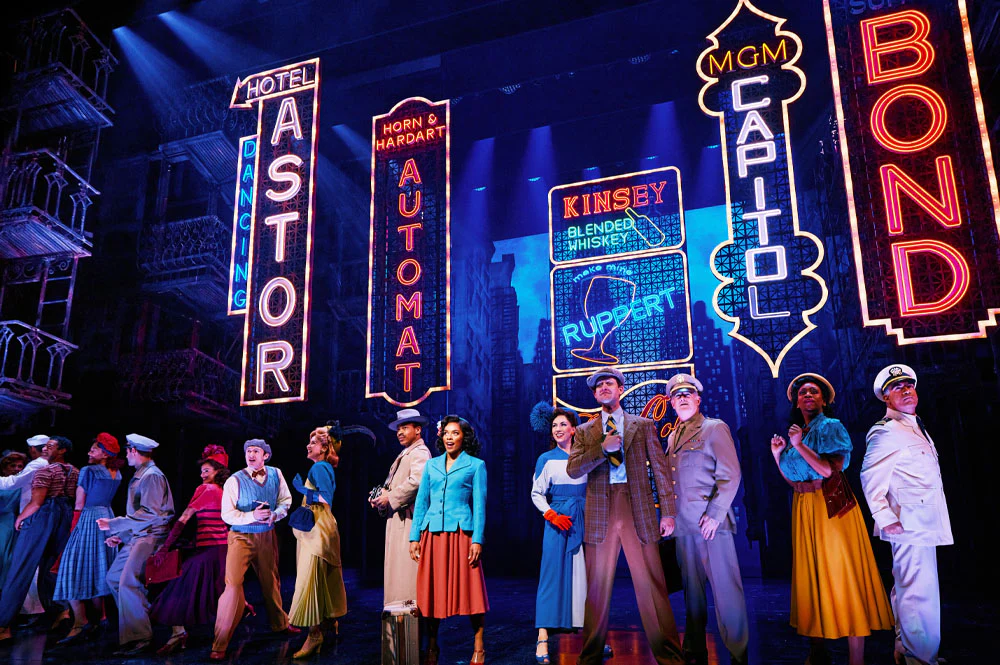
Broadway isn't just theater. It's alchemy. A single show represents hundreds of artists, thousands of decisions, and millions of dollars—all converging to create two and a half hours of magic that feels effortless. But nothing about the process is accidental. Every laugh, tear, and gasp is engineered by a constellation of creatives working in concert.
This is the story of how stories get made on the Great White Way—not as a fairy tale, but as a testament to human collaboration at its most ambitious.
Phase 1: The Spark (Where Ideas Learn to Walk)
Every Broadway show begins with a question: What if?
Sources of inspiration:
- Original concepts born from a writer's lived experience or imagined world
- Book adaptations that translate literary depth into musical momentum ( The Great Gatsby )
- Movie-to-musical translations that reimagine cinematic moments for the stage ( Hell's Kitchen )
- Jukebox catalogs woven into narrative tapestries ( & Juliet )
But an idea isn't a show. Not yet.
Workshops and readings: The laboratory of theater
Before a single set is built, writers gather actors in a rehearsal room with music stands and hope. These intimate sessions—sometimes just a piano and a circle of chairs—test whether songs land, jokes land, and hearts connect. Feedback is brutal and beautiful. Scenes are cut. Lyrics are rewritten. Characters evolve.
"A workshop isn't about perfection. It's about discovery. You're not asking 'Is this good?' You're asking 'Does this live?' And sometimes the answer is no—and that's the most valuable answer of all."
The collaboration dynamic
Writing teams operate like creative marriages. Composers craft melody; lyricists shape word; book writers structure story. When it works, it's telepathic. When it doesn't? It's a negotiation. The best teams argue fiercely but listen deeper. The goal isn't consensus—it's truth.
Phase 2: Building the World (Where Vision Meets Craft)
Once the script breathes, the real construction begins. The director becomes the show's North Star, translating text into sensory experience.
Design deep-dives: The invisible architecture of emotion
Scenic Design
Sets aren't just backdrops—they're emotional landscapes. A revolving platform can mirror a character's turmoil. A minimalist scaffold can evoke both prison and possibility. And in Broadway's rapid-change world, every piece must move silently, swiftly, and safely—often in under 30 seconds.
Costume Design
Clothing tells story before a word is spoken. A frayed hem signals hardship; a sudden color shift marks transformation. Beyond aesthetics, costumes are engineering feats: quick-change mechanisms hidden in seams, fabrics that withstand eight shows a week, shoes that look elegant but support high-kick choreography.
Lighting & Sound
These are the show's nervous system. Lighting doesn't just illuminate—it directs attention, signals time shifts, and amplifies mood. Sound design ensures every whisper reaches the balcony while balancing a 20-piece orchestra. The best work in these disciplines goes unnoticed because it feels inevitable.
Choreography as Storytelling
Movement isn't decoration—it's dialogue. A solo can reveal inner conflict; an ensemble number can build revolutionary fervor. Choreographers collaborate closely with directors to ensure every step advances plot or deepens character. If a dance number could be cut without affecting the story, it doesn't belong.
Phase 3: Casting the Magic (Finding the Humans for the Story)
A perfect script with the wrong cast is a beautiful blueprint with no house.
The audition ecosystem:
- Open calls: Hundreds line up at 7 a.m. for a 32-bar chance. Hope is palpable.
- Agent submissions: Established performers are invited to audition based on reputation.
- Callback marathons: Finalists return to sing, dance, and read—sometimes for hours—with the full creative team.
Star power vs. ensemble strength
Producers face a delicate calculus: Does attaching a known name guarantee ticket sales? Or does authentic casting—choosing the right voice, the right presence, the right spirit—serve the story better? The most enduring shows often balance both: a recognizable anchor surrounded by extraordinary, sometimes undiscovered, talent.
Diversity as creative imperative
Casting in 2026 isn't just about filling roles—it's about reflecting the world we live in and imagining the world we want. Thoughtful casting challenges stereotypes, expands representation, and deepens storytelling. The question isn't "Can they play this?" but "What new truth emerges when they do?"
Phase 4: Rehearsal Room to Preview Stage (Where Theory Meets Audience)
The rehearsal period (typically 4-8 weeks) is where the show learns to breathe.
The rhythm of creation:
- Table work: Actors and creatives read through the script, discussing motivation, theme, and intention.
- Blocking: Movement is mapped—where actors stand, walk, turn—like choreography for dialogue.
- Tech rehearsals: Lights, sound, sets, and costumes integrate. This phase is famously slow: one minute of stage time can take an hour to perfect.
- Dress rehearsals: Full run-throughs in costume, simulating performance conditions.
Previews: The show learns from its audience
Broadway shows "open" after a preview period for a reason. Real audience reactions—laughter that lands flat, silence where tears were expected—provide irreplaceable data. Creative teams take notes nightly. Songs get trimmed. Jokes get sharpened. Endings get reworked. It's surgery in real time.
The art of revision
Feedback is a gift—but not all feedback serves the vision. The director's job is to filter: What notes clarify the story? Which dilute it? The best revisions feel inevitable in hindsight, as if the show always knew this shape.
Phase 5: Opening Night & Beyond (When the Show Belongs to the World)
Opening night isn't an ending—it's a beginning.
The critic's role in 2026
Reviews still matter, but their influence has evolved. A glowing New York Times notice can ignite ticket sales; a pan can challenge a show's survival. Yet social media buzz, word-of-mouth, and influencer partnerships now shape momentum too. The ecosystem is more complex—and more democratic—than ever.
Marketing the magic
- Social media teasers that build anticipation without spoiling surprises
- Influencer partnerships that reach new audiences authentically
- Today Show performances and subway ads that turn curiosity into commitment
The touring machine
A Broadway hit doesn't stay in New York. National and international tours require reimagining: scaling designs for different theaters, casting local talent, adapting cultural references. The core story remains—but its expression travels.
Case Study: Stereophonic 's Journey from Page to Pulitzer
Let's trace one recent triumph: Stereophonic , David Adjmi's love letter to 1970s rock creation.
The spark: Adjmi's fascination with artistic collaboration + the mythic energy of Fleetwood Mac's Rumours era.
Workshop wisdom: Early readings revealed the script's strength wasn't plot—it was the messy, electric process of making art together. The team leaned into that.
Design as time machine: Scenic designer Laura Jellinek built a recording studio that felt authentically 1976—down to the ashtrays. Costume designer Emily Rebholz dressed characters in clothes that looked lived-in, not costumed.
Casting chemistry: The ensemble needed to feel like a real band—musically skilled, emotionally volatile, creatively symbiotic. The casting process prioritized ensemble cohesion over individual star power.
Preview pivots: Audience feedback helped tighten the second act's emotional climax. A song was repositioned; a silence was extended. Small changes, profound impact.
The payoff: A Pulitzer Prize, critical raves, and audiences who left feeling they'd witnessed not just a show, but a secret: how art gets made.
"The hardest part wasn't the long hours or the technical complexity. It was trusting that the messiness of creation—the arguments, the doubts, the breakthroughs—was the story worth telling. And that the audience would lean in, not away." — A member of the Stereophonic creative team
For Aspiring Theater-Makers: Your First Curtain Call
Dreaming of contributing to the Great White Way? Start here.
Pathways in:
- MFA programs: Yale School of Drama, NYU Tisch, Columbia—rigorous training with industry connections
- Internships: Broadway productions, regional theaters, and theatrical agencies offer foot-in-the-door opportunities
- Assistant positions: Work alongside established directors, designers, or stage managers to learn the craft
- Playwright collectives: The Drama League, New Dramatists, and local writer's groups provide community and development
Real talk:
- Rejection is the norm. Persistence is the requirement.
- Financial instability is real—many theater-makers juggle side jobs for years.
- Network with generosity, not agenda. Relationships matter more than resumes.
- Create your own work. Don't wait for permission.
Why This Matters
Understanding the collaborative art of Broadway doesn't diminish the magic—it deepens it. When you know the hundreds of hands that shape a single cue, the applause you offer becomes more than appreciation. It becomes recognition.
Every show you attend is a testament to human courage: the courage to create, to collaborate, to risk failure in pursuit of something true. That's not just entertainment. That's inspiration.
So the next time the lights dim and the overture begins, listen closely. You're not just hearing a story. You're witnessing a miracle of collaboration—years in the making, perfected in real time, offered freely to you.
And that? That's worth standing up for.
Written by
Julian CrossContributing Author · Nightguide NYC
Julian Cross writes about New York as a living organism—its power structures, subcultures, and shifting urban identity.
View profile →